PERRY, SCHUMAN, AND HARRIS
Notes on the composers and the pieces
Julia Perry
Short Piece for Large Orchestra
William Schuman
A Free Song
Roy Harris
Symphony No. 6 “Gettysburg”
Return to Home Page |
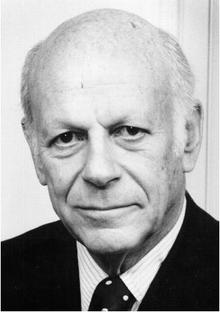
William Schuman: A Free Song (Secular Cantata for Chorus and Orchestra)
If I were to pair another American composer with Roy Harris, it would be William Schuman (1910–1992). While Harris composed music that exudes an image of open land and plains, Schuman, a lifelong resident of New York City, is an automatic choice to represent cities.
An American Record Guide review of Schuman’s Violin Concerto made a similar contention, describing Schuman as “bold, adventurous, majestic, aggressive, tenacious, indomitable spirit, and steel”—my vision of Schuman exactly.
William Schuman attended Columbia University and studied with Harris. After graduation, he joined the faculty of Sarah Lawrence College in 1935. In 1943, he won the first Pulitzer Prize given in music for A Free Song. He served as President of the Juilliard School of Music from 1945 to 1962. There he revised several aspects of teaching and founded the Juilliard String Quartet. He also served as President of Lincoln Center for the Performing Arts from 1962 through 1968 and presided over the opening of the Center’s Philharmonic Hall on September 23, 1962.
Schuman’s compositional output includes ten symphonies, five ballets, two operas, and works for concert band, chorus, and chamber music. He was one of many American composers to write music to poems by Walt Whitman. A Free Song (1942) is set to passages from Whitman’s Drum Taps. G. Schirmer, Schuman’s publisher, describes it well: “The vigorous, expansive verse of Whitman finds a congenial association with Schuman’s fierce and concentrated style, where grace and charm are crowded out by the impact of granite-like blocks of dissonant harmony and sharp-edged counterpoint.” Schuman was recognized with many awards, including the Edward MacDowell Medal (1971) and the National Medal of Arts (1987).
The first movement of A Free Song concerns the hard truths drawn from a time of national stress: “Long, too long, America—you learned from joys and prosperity only, but now, ah now, to learn from crises of anguish.” Schuman captured not only the pervasive mood of troubled uncertainty in those words but also the pictorial implications of such phrases as, “Traveling roads all even and peaceful…Pour softly down night’s nimbus floods…” And from the second movement: “A new song, a free song,…We hear the drums beat, and the trumpets blowing,…We hear the jubilant shouts of millions of men, We hear liberty!”
A Free Song was premiered by the Boston Symphony Orchestra and Harvard-Radcliffe Chorus under Serge Koussevitsky on March 26, 1943.
—Roger Hecht
Roger Hecht plays trombone in the Mercury Orchestra. He is a former member of Bay Colony Brass (where he was also the Operations/Personnel Manager), the Syracuse Symphony, Lake George Opera, New Bedford Symphony, and Cape Ann Symphony, as well as trombonist and orchestra manager of Lowell House Opera, Commonwealth Opera, and MetroWest Opera. He is a regular reviewer for American Record Guide, contributed to Classical Music: Listener’s Companion, and has written articles on music for the Elgar Society Journal and Positive Feedback magazine. His fiction collection, The Audition and Other Stories, includes a novella about a trombonist preparing for and taking a major orchestra audition (English Hill Press, 2013).
Read about Roy Harris
|
